Alternate Guitar Tunings Explained
Unlock New Sounds with True Lock Tuner
Standard guitar tuning (E-A-D-G-B-E) is where most players begin, but alternate tunings open the door to entirely new sounds, riffs, chord voicings, and creative possibilities. Whether you play rock, metal, blues, folk, acoustic fingerstyle, or experimental music, alternate tunings can completely change the feel of your guitar.
Many legendary guitarists built their signature sound around alternate tunings. From heavy Drop C riffs to the open, ringing sound of Open G, changing your tuning can instantly inspire new ideas and make familiar songs feel fresh again.
With True Lock Tuner, you can quickly switch between popular alternate tunings without needing to memorize string notes or manually calculate pitch changes. The app includes a collection of some of the most commonly used tunings in modern guitar music, making it easy to experiment and discover new sounds.
Unlock New Sounds with True Lock Tuner
Alternate tunings are popular because they can:
- Make certain riffs easier to play
- Create heavier or deeper tones
- Produce fuller sounding chords
- Improve slide guitar playing
- Unlock new fingerstyle patterns
- Inspire creativity and songwriting
- Help recreate the sound of famous songs and artists
Some tunings are designed for aggressive modern rock and metal, while others create rich open chords perfect for acoustic playing and blues.
Tips Before Switching Tunings
Before changing tunings frequently, keep a few things in mind:
Tune Slowly
When raising or lowering pitch, adjust strings gradually to avoid unnecessary stress on the strings or neck.
Expect Different String Tension
Lower tunings reduce string tension, which can make strings feel looser or create fret buzz. Players who stay in lower tunings regularly often use heavier gauge strings.
Recheck Your Tuning
Changing one string affects overall neck tension slightly, so it’s normal to need a second tuning pass after all strings are adjusted.
Use a Reliable Tuner
Alternate tunings are much easier when your tuner already supports them directly. True Lock Tuner includes dedicated support for all featured tunings so you can retune quickly and accurately.
Alternate Tunings Available in True Lock Tuner
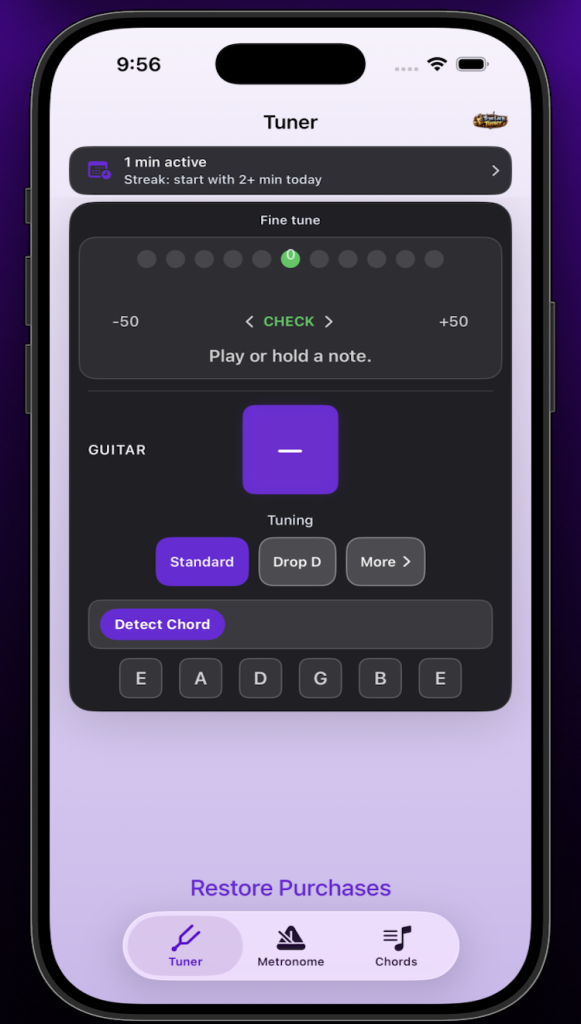
Standard Tuning
E-A-D-G-B-E
Standard tuning remains the foundation for most guitar playing. It offers balanced tension, familiar chord shapes, and works across nearly every genre.
Even if you spend time exploring alternate tunings, standard tuning is always the reference point most players return to.
Drop Tunings
Drop tunings are especially popular in rock and metal because they allow fast power chords and heavier sounding riffs.
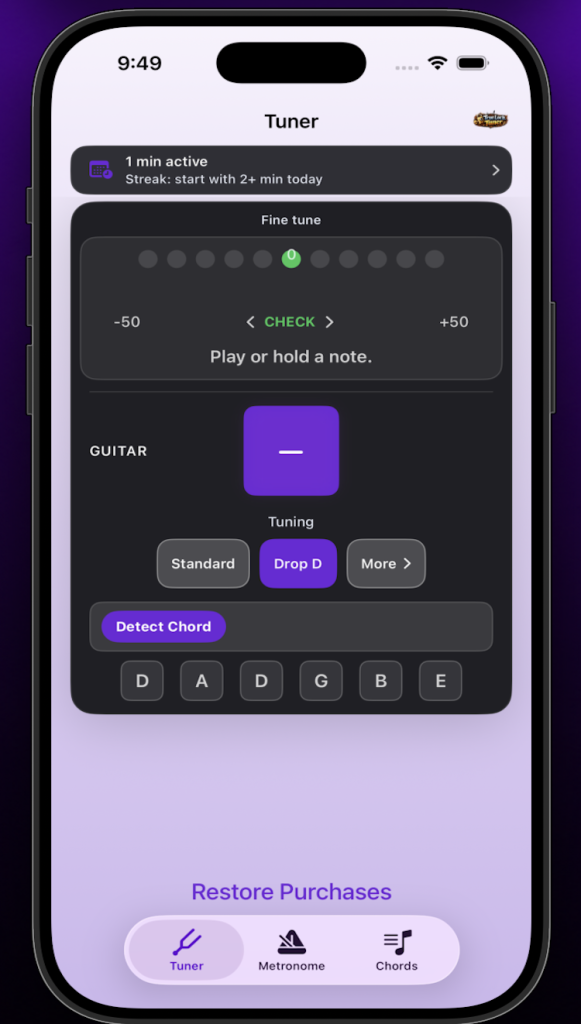
Drop D Tuning
D-A-D-G-B-E
Drop D is often the first alternate tuning guitarists learn because only one string changes. Your low E string drops down one full step to D.
This tuning creates a heavier low-end sound and makes power chords easier to play using one finger across the lowest strings.
Great For:
- Rock
- Grunge
- Alternative
- Hard rock
- Metal
Famous Songs Using Drop D:
- “Everlong” — Foo Fighters
- “Killing in the Name” — Rage Against the Machine
- “Outshined” — Soundgarden
- “All Apologies” — Nirvana
Drop D is perfect for players who want heavier riffs without completely changing familiar chord shapes.
Double Drop D Tuning
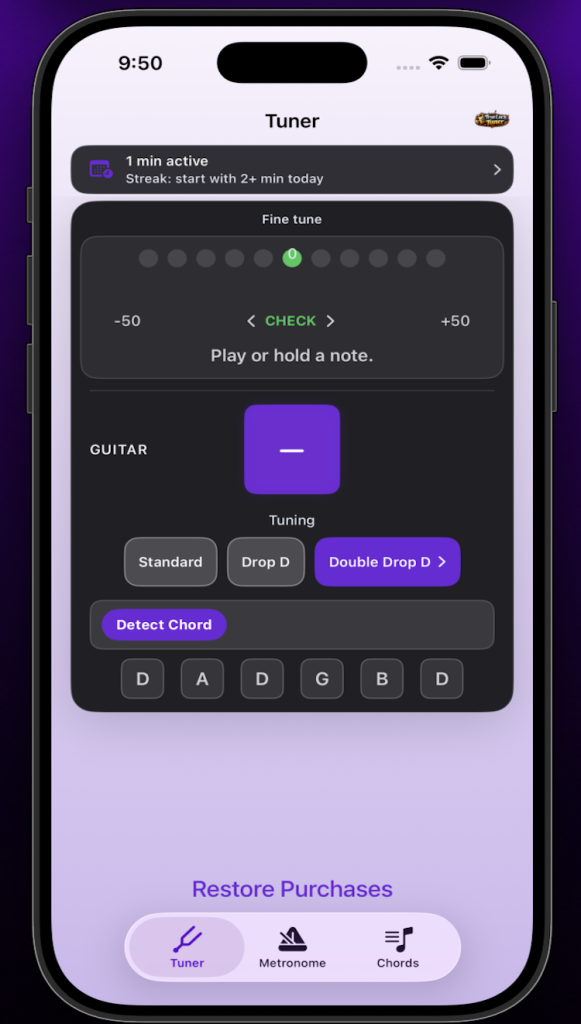
D-A-D-G-B-D
Double Drop D lowers both E strings down to D, creating a huge, symmetrical sound.
This tuning works especially well for acoustic fingerstyle, folk music, and droning chord voicings.
Great For:
- Acoustic guitar
- Fingerstyle
- Folk
- Singer-songwriter arrangements
The low and high D strings create a wide open resonance that sounds massive even with simple chord progressions.
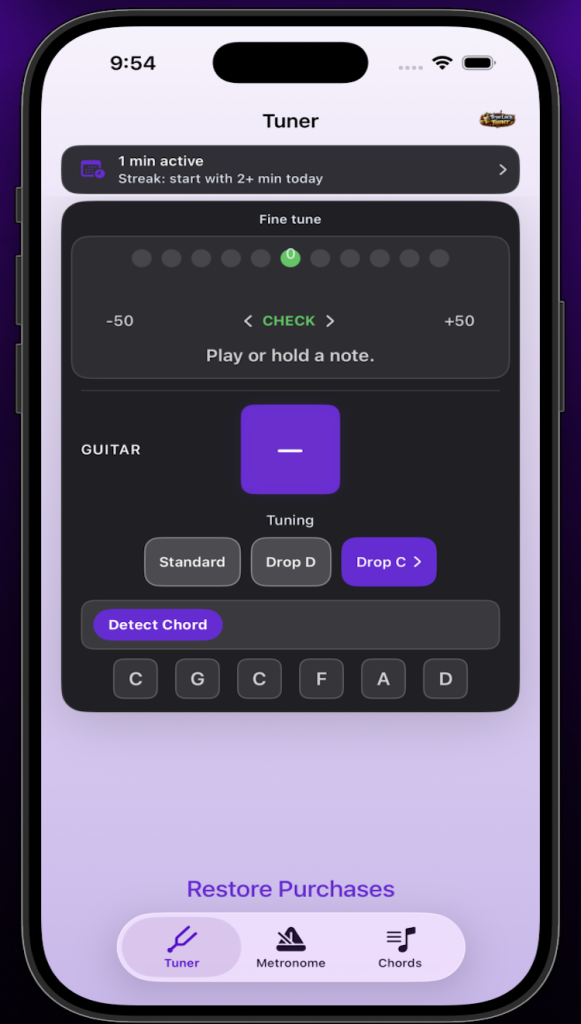
Drop C Tuning
C-G-C-F-A-D
Drop C takes the Drop D concept even further by lowering every string while keeping similar fingering relationships.
The result is an aggressive, deep, modern metal tone with huge sounding riffs and chugs.
Great For:
- Metalcore
- Hard rock
- Modern metal
- Heavy rhythm guitar
Songs & Bands Associated with Drop C:
- Killswitch Engage
- Bring Me the Horizon
- As I Lay Dying
Players love Drop C because it sounds extremely heavy while still keeping familiar riff patterns from Drop D.
Down Tunings
These tunings lower all strings evenly while preserving standard tuning relationships.
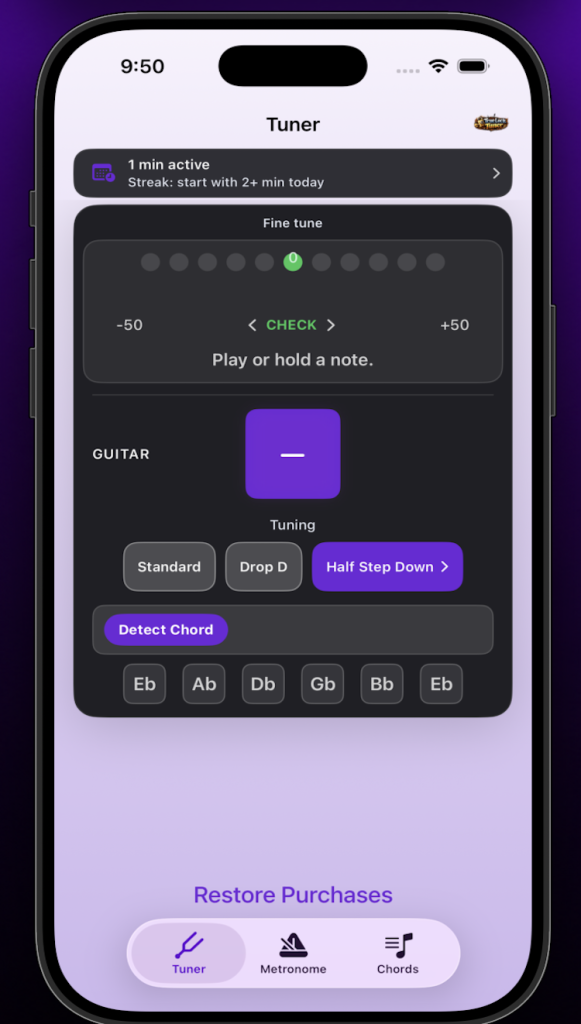
Half Step Down
E♭-A♭-D♭-G♭-B♭-E♭
Half Step Down is incredibly common in rock music. Every string is lowered by one semitone.
This gives guitars a slightly darker tone and makes bending easier because the strings feel looser.
Commonly Used By:
- Guns N’ Roses
- Jimi Hendrix
- Stevie Ray Vaughan
- Alice in Chains
Many vocalists also prefer this tuning because it slightly lowers the song’s key.
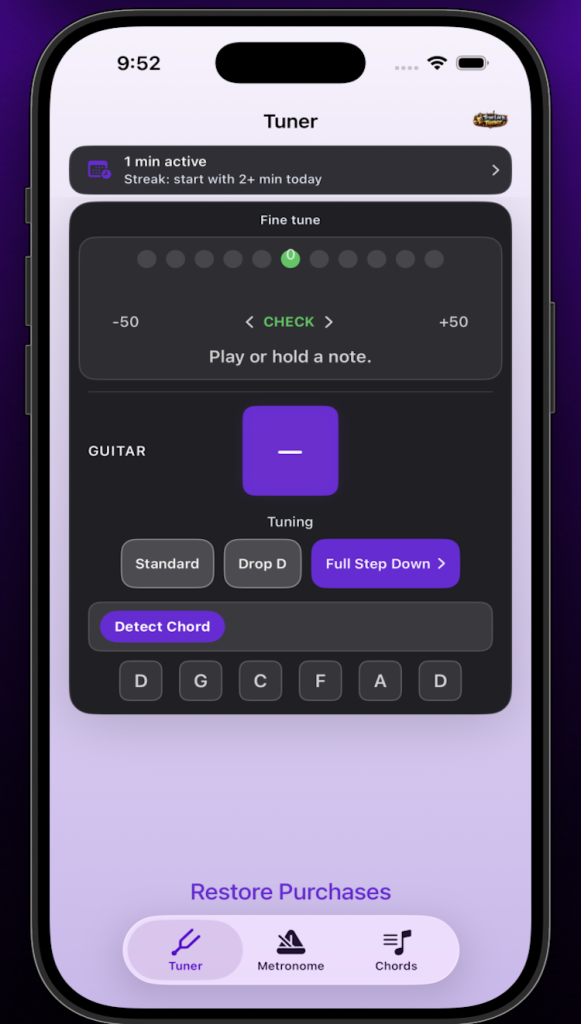
Full Step Down
D-G-C-F-A-D
Full Step Down lowers every string by an entire step.
Compared to standard tuning, the guitar sounds thicker, deeper, and more aggressive while still keeping familiar chord shapes.
Great For:
- Hard rock
- Alternative rock
- Heavy blues
- Modern rock
This tuning gives riffs extra weight while remaining comfortable to play.
Open Tunings
Open tunings create a full chord when all open strings are strummed together. These tunings are favorites among blues, folk, and slide guitar players.
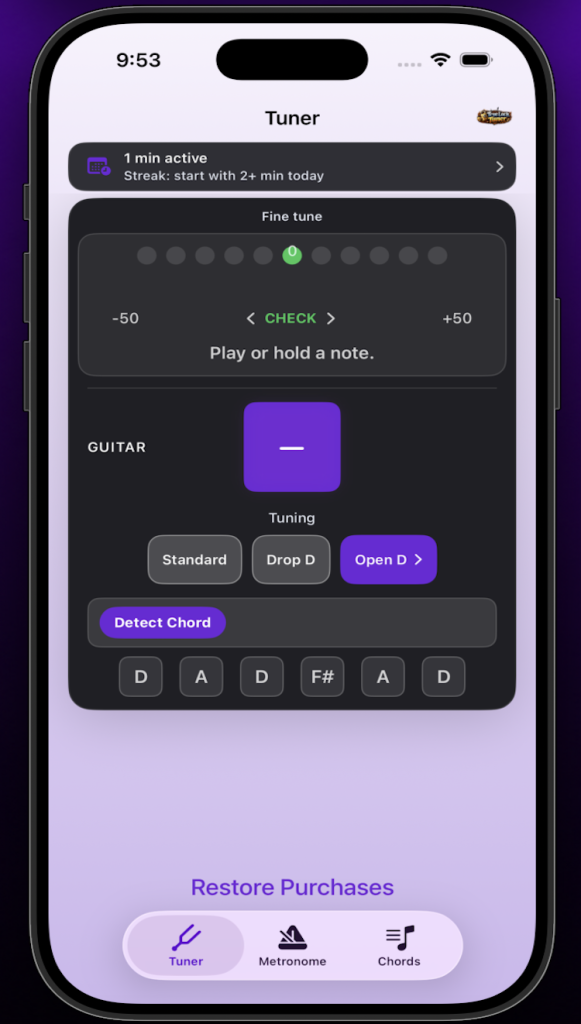
Open D Tuning
D-A-D-F♯-A-D
Open D creates a naturally rich D major chord when strumming all open strings.
The tuning produces huge resonant chords and works beautifully for slide guitar and acoustic fingerpicking.
Great For:
- Folk
- Blues
- Slide guitar
- Acoustic songwriting
Songs Associated with Open D:
- “Big Yellow Taxi” — Joni Mitchell
- “The Cave” — Mumford & Sons
Open D has a warm, cinematic quality that feels wide and expressive.
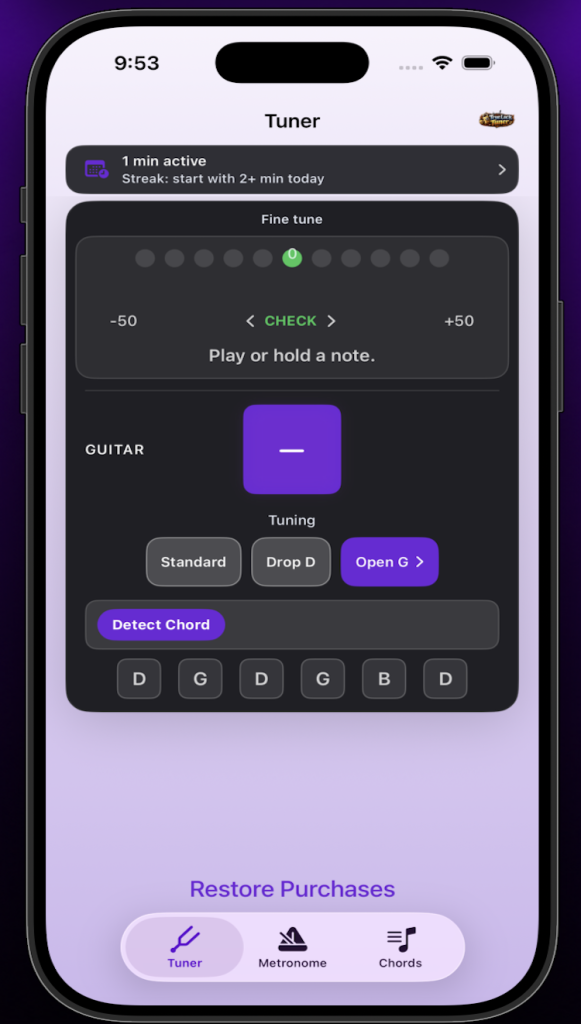
Open G Tuning
D-G-D-G-B-D
Open G is one of the most iconic tunings in classic rock and blues.
Because the strings already form a G chord, chord shapes become incredibly simple and rhythmic playing feels natural.
Great For:
- Blues
- Classic rock
- Slide guitar
- Rhythm guitar
Artists Known for Open G:
- Keith Richards
- Muddy Waters
- The Black Crowes
Songs Using Open G:
- “Street Fighting Man”
- “Can’t You Hear Me Knocking”
- “Goin’ to California”
Open G delivers a loose, rootsy feel that works beautifully for riffs and open chord textures.
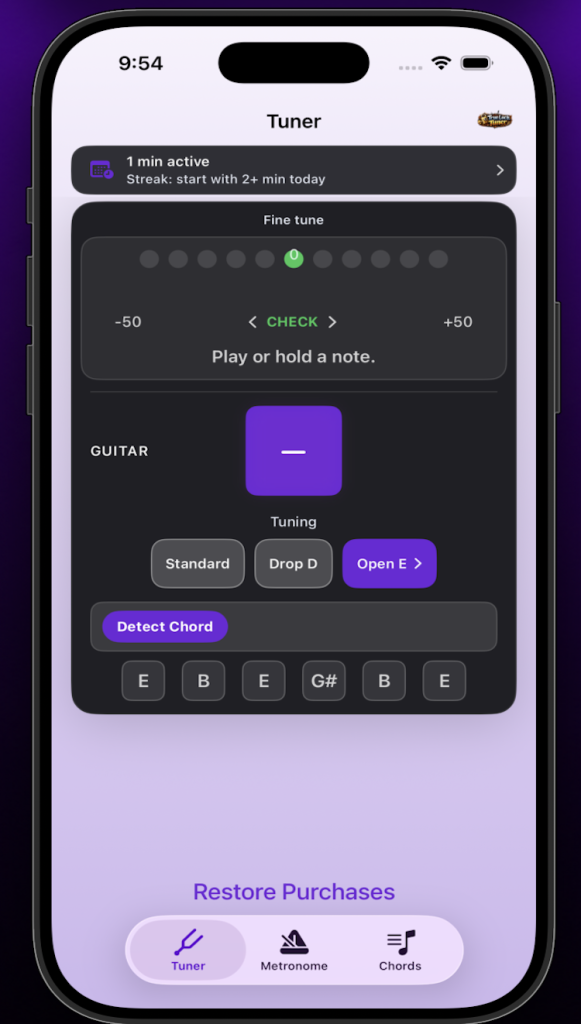
Open E Tuning
E-B-E-G♯-B-E
Open E creates a bright and powerful E major chord across the open strings.
This tuning has incredible sustain and energy, making it popular for slide guitar and blues rock.
Great For:
- Blues rock
- Slide guitar
- Southern rock
- Lead guitar
Because several strings are tuned upward, Open E creates more tension on the neck than many other tunings. Players should tune carefully and consider string gauge if using it regularly.
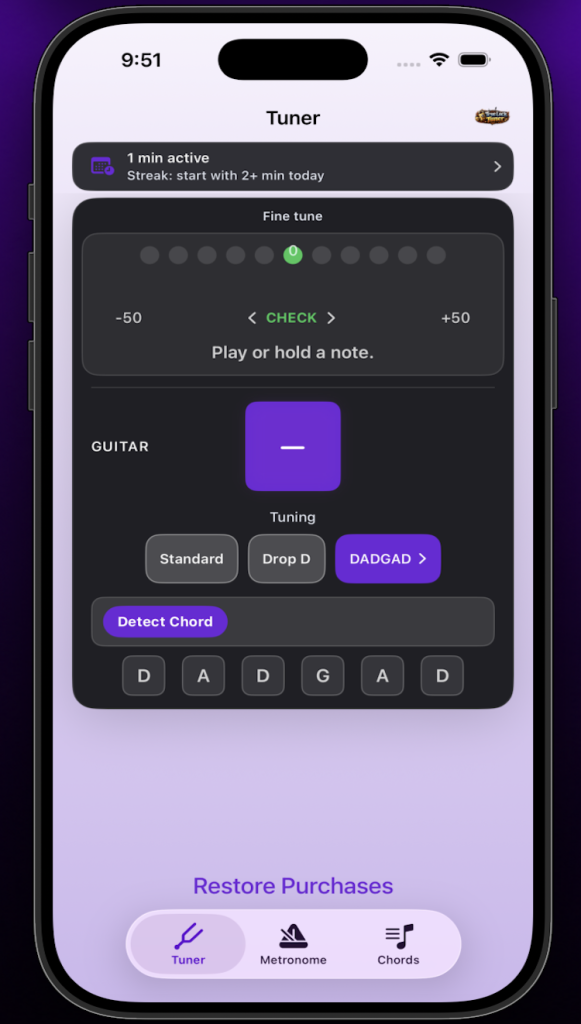
DADGAD Tuning
D-A-D-G-A-D
DADGAD is famous for its mysterious, atmospheric sound.
Originally associated with Celtic and folk music, it later became popular in progressive, ambient, and acoustic styles because of its rich suspended chord voicings.
Great For:
- Celtic music
- Fingerstyle guitar
- Ambient guitar
- Acoustic arrangements
DADGAD encourages creative chord shapes and produces lush harmonics even with simple finger placements.
Why Alternate Tunings Inspire Creativity
One of the biggest benefits of alternate tunings is that they force you to think differently about the guitar.
Chord shapes change. Riffs feel different. Open strings resonate in unexpected ways. Many players discover their best songwriting ideas simply by trying a tuning they’ve never used before.
Some artists built entire careers around alternate tunings because they unlock sounds impossible to achieve in standard tuning.
Explore Alternate Tunings with True Lock Tuner
True Lock Tuner makes switching tunings simple with built-in support for:
- Standard
- Drop D
- Double Drop D
- Half Step Down
- DADGAD
- Full Step Down
- Open D
- Open G
- Drop C
- Open E
Whether you want crushing metal riffs, classic rock tones, acoustic fingerstyle textures, or experimental sounds, alternate tunings can completely transform your playing experience.
The best way to discover your favorite tuning is simple:
Experiment, explore, and start playing.